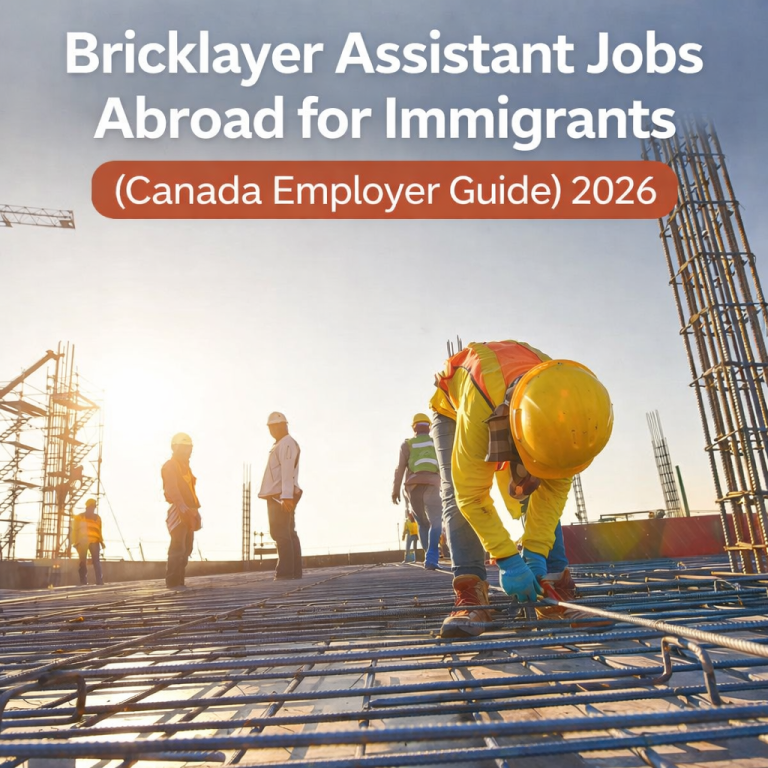
Top 10 Best Construction Labor Jobs Abroad for Immigrants (Canada Employer Guide) 2026
Canada continues to rely on immigrant workers to keep its construction industry running. As an employer, I can say this clearly: many projects across Canada would slow down or stop without foreign workers. Housing demand, infrastructure expansion, and commercial development have created long-term labour shortages. These shortages affect both skilled trades and general construction labour roles. Immigrants now play a major role in filling these gaps and keeping projects on schedule.
From road construction to residential housing and industrial sites, entry-level construction jobs remain open year-round. These jobs often do not require a university degree. What employers look for instead is reliability, physical fitness, basic safety awareness, and willingness to learn. For immigrants seeking legal work in Canada, construction labour jobs offer one of the most realistic entry points into the workforce. With the right employer and correct work permit, many workers build stable careers and long-term residence in Canada.
2. Entry-Level Skills and Experience Required
Most construction labour jobs in Canada are open to beginners. Employers do not expect advanced qualifications at the entry level.
What we usually look for includes:
-
Ability to follow instructions and safety rules
-
Physical stamina and ability to work outdoors
-
Basic English communication for safety and teamwork
-
Willingness to learn on the job
-
Punctuality and reliability
Previous experience helps, but it is not always required. Many employers provide basic site training. Some roles may require short safety courses such as WHMIS or basic site orientation, which employers often help new workers complete after hiring.3. Regions with the Highest Payment Structures
Construction wages vary by region due to demand, cost of living, and project scale.
Top 5 High-Paying Regions in Canada
-
Alberta
High demand for industrial, energy, and infrastructure projects. Wages are competitive due to labour shortages. -
British Columbia
Strong housing and commercial construction market, especially in urban areas. -
Ontario
Large volume of residential and infrastructure projects across multiple cities. -
Saskatchewan
Industrial and public infrastructure projects offer steady work and solid hourly pay. -
Manitoba
Growing demand for road, housing, and municipal construction workers.
4. Salary Expectations for Immigrants
Construction labour wages depend on role, location, and experience level.
Average Construction Labor Wages in Canada
| Job Role | Hourly Wage (CAD) |
|---|---|
| General Construction Laborer | $18–$25 |
| Site Helper | $17–$24 |
| Road Construction Worker | $20–$30 |
| Concrete Laborer | $22–$32 |
| Warehouse/Material Handler (Construction) | $18–$26 |
| Plumber | $20–$28 |
| Scaffolding Assistant | $22–$30 |
| Demolition Laborer | $21–$29 |
| Drywall Helper | $19–$27 |
| Roofing Laborer | $20–$30 |
Summary:
Most entry-level immigrants start between $18 and $25 per hour. With experience, safety certifications, and reliability, wages increase within the first year.
5. Companies Hiring Construction Labor Immigrants in Canada
Below are real, established companies that regularly hire foreign workers when labour shortages exist. Hiring depends on project needs and legal eligibility.
Top Employers and Typical Requirements
-
PCL Construction
Requires legal work authorisation and site safety compliance. -
EllisDon
Entry-level roles are available; safety training is required. -
Aecon
Large infrastructure projects: a valid work permit is required. -
Bird Construction
Focus on industrial and commercial sites; on-site training provided. -
Ledcor
Requires physical fitness and safety awareness. -
Graham Construction
Often hires labourers for large public projects. -
Kiewit Canada
Infrastructure projects; strict safety standards. -
Flatiron Construction Canada
Road and bridge projects; entry-level roles available. -
Clark Builders
Residential and commercial work; reliable attendance required. -
Pomerleau
Large-scale projects; basic English communication needed.
similar Job: https://jobs.skillroute.blog/2026/01/24/15-high-paying-plumber-construction-jobs-in-canada-with-visa-sponsorship-2026/
6. Visa Types and Options for Construction Work
Construction labourers usually work in Canada through legal, employer-based permits.
Common options include:
-
Temporary Foreign Worker Program (TFWP)
Used when Canadian workers are unavailable. -
LMIA-Based Work Permit
The employer proves a labour shortage and hires foreign workers legally. -
Provincial Nominee Programs (PNP)
Some provinces nominate construction workers for long-term residence.
Employers cannot bypass immigration laws. Workers must hold valid permits before starting work.
7. Where to Find Construction Job Opportunities
Reliable job sources include:
-
Job Bank Canada
-
Company career pages (direct applications)
-
Provincial construction associations
-
Licensed recruitment agencies
-
Local trade unions (where applicable)
Avoid agents who promise “guaranteed visas”. Legitimate employers follow Canadian immigration rules.
8. How to Apply for Construction Jobs as an Immigrant
Follow these steps carefully:
-
Prepare a simple Canadian-style resume
-
Apply directly to employers or Job Bank listings
-
Attend interviews (online or in person)
-
Receive a job offer
-
The employer applies for LMIA if required
-
Apply for a work permit
-
Travel only after approval
Never pay an employer for a job offer. That is illegal in Canada.
9. Clear Hiring Reality for Immigrants
Construction work is physically demanding. Weather conditions can be harsh. However, the work offers steady income, overtime opportunities, and long-term career paths. Many supervisors and tradespeople in Canada started as labourers.
10. Final Employer Perspective
As a Canadian employer, I can confirm that construction labour remains one of the most accessible job paths for immigrants. Employers value hard work, consistency, and safety awareness more than formal education. Immigrants who respect site rules and show commitment often move into better-paying roles within a short time.
Canada needs construction workers, but success depends on following legal processes and realistic expectations.