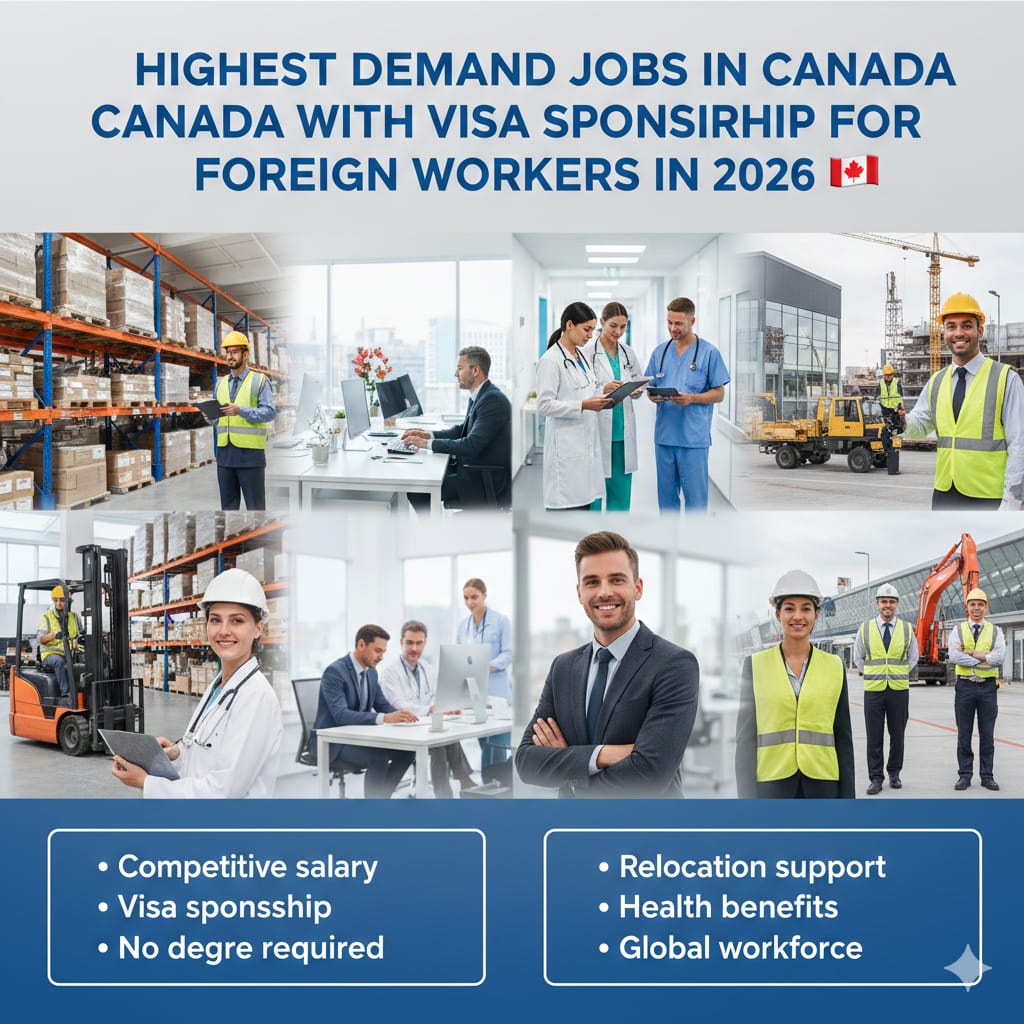
High-Demand Jobs in Canada with Visa Sponsorship for Foreign Workers -in 2026
Canada remains one of the most attractive destinations for foreigners seeking stable employment abroad due to its strong economy, worker-friendly policies, and structured immigration pathways. With an aging population and persistent labor shortages across multiple sectors, the Canadian government actively encourages skilled and unskilled immigrants to fill critical workforce gaps. As a result, high-demand jobs in Canada with visa sponsorship for foreign workers have increased significantly in recent years, creating real opportunities for immigrants looking to build a long-term career oversea.
For many foreign job seekers, visa sponsorship is the most important factor when considering employment abroad. Canada offers several immigration and work permit programs that allow employers to legally hire foreigners when qualified local candidates are unavailable. These programs are carefully regulated, ensuring that foreign workers are protected under Canadian labor laws while contributing meaningfully to the economy. From healthcare and construction to agriculture and technology, sponsored jobs now exist at both entry-level and professional levels.
This article provides a comprehensive guide for immigrants seeking high-demand jobs in Canada with visa sponsorship. It covers entry-level opportunities, visa requirements, salary expectations, application documents, and trusted employment websites. Whether you are a skilled professional or an entry-level worker searching for a job abroad, this guide is designed to help you navigate Canada’s employment landscape with confidence and accuracy.
Entry Level Jobs for Immigrants
Entry-level jobs play a crucial role in Canada’s labor market and remain one of the most accessible employment pathways for immigrants and foreigners abroad. These positions often require minimal formal education or previous experience, making them ideal for newcomers seeking immediate employment while gaining Canadian work exposure. Employers in industries facing labor shortages frequently offer visa sponsorship through programs such as the Temporary Foreign Worker Program (TFWP) or the International Mobility Program (IMP).
One of the most common entry-level job categories for immigrants is general labor and warehouse work. These roles are widely available across provinces such as Ontario, Alberta, and British Columbia. Tasks may include packaging, loading, cleaning, and inventory management. Due to high turnover rates and physical demands, employers are often willing to sponsor foreign workers to maintain productivity. These jobs abroad typically offer competitive hourly wages, overtime opportunities, and pathways to permanent residency.
Another major entry-level employment sector is hospitality and food services. Restaurants, hotels, resorts, and catering companies regularly hire foreigners for roles such as kitchen assistants, food counter attendants, dishwashers, hotel cleaners, and housekeeping staff. Many rural and tourist-dependent regions struggle to find local workers, increasing sponsorship opportunities for immigrants. These positions also provide flexible schedules and rapid employment, making them attractive to newcomers seeking immediate income abroad.
The agriculture and caregiving sectors also offer consistent entry-level jobs with visa sponsorship. Farm workers, greenhouse laborers, fruit pickers, livestock attendants, and home support workers are in high demand nationwide. Programs like the Seasonal Agricultural Worker Program (SAWP) and the Home Child Care Provider Pilot allow foreigners to work legally in Canada with a clear immigration structure. For many immigrants, these entry-level jobs serve as a stepping stone toward long-term settlement and permanent resident status.
Visa Requirements for Employment
To legally work in Canada as a foreigner, a valid work visa or permit is required. Most visa-sponsored jobs fall under the Temporary Foreign Worker Program (TFWP), which requires employers to obtain a Labour Market Impact Assessment (LMIA). The LMIA confirms that hiring a foreign worker will not negatively affect Canadian citizens or permanent residents and that no suitable local worker is available for the job.
Some jobs fall under the International Mobility Program (IMP), which does not require an LMIA. These include certain international agreements, intra-company transfers, and employer-specific exemptions. However, most entry-level and labor-based jobs for immigrants abroad still require LMIA approval. Once the LMIA is issued, the foreign worker can apply for a work permit using the employer’s job offer and supporting documents.
In addition to the work permit, applicants must meet standard immigration requirements. These include a valid passport, proof of job offer, medical examination (if required), police clearance certificate, and proof of intent to return home if the permit expires. Meeting visa requirements accurately is critical, as errors or incomplete documentation can lead to delays or refusals.
Salary Scale for Immigrants
Below is an overview of average salary expectations for high-demand jobs in Canada with visa sponsorship for foreign workers. Actual wages may vary by province, employer, and experience level.
| Job Category | Average Monthly Salary (CAD) | Annual Salary (CAD) |
|---|---|---|
| General Laborer | 2,400 – 3,200 | 28,800 – 38,400 |
| Warehouse Worker | 2,600 – 3,500 | 31,200 – 42,000 |
| Farm Worker | 2,200 – 3,000 | 26,400 – 36,000 |
| Caregiver / Support Worker | 2,800 – 3,800 | 33,600 – 45,600 |
| Poultry worker | 2,300 – 3,100 | 27,600 – 37,200 |
| Construction Helper | 3,000 – 4,200 | 36,000 – 50,400 |
| Truck Driver | 4,000 – 6,000 | 48,000 – 72,000 |
These salary ranges reflect entry-level to mid-level positions commonly available to immigrants and foreigners working oversea in Canada.
Application Requirements and Documents
Applying for a visa-sponsored job in Canada requires careful preparation of official documents. The most important requirement is a valid job offer letter from a licensed Canadian employer. This letter must outline job duties, salary, work hours, location, and duration of employment. For LMIA-based jobs, the employer must also provide the LMIA approval number.
Foreign workers must submit a valid international passport, typically with at least six months of validity remaining. Additional documents include a professional CV formatted to Canadian standards, educational certificates (if applicable), and proof of relevant work experience. Some jobs may require trade certificates or basic training credentials.
Applicants may also need a medical examination conducted by an approved panel physician, especially for healthcare, caregiving, or agricultural roles. A police clearance certificate is required to prove good character and admissibility. Providing complete, accurate documents significantly increases the chances of visa approval and smooth entry into Canada for employment abroad.
Employment Websites to Find Opportunities
Several official and trusted websites list visa-sponsored jobs in Canada for foreigners and immigrants abroad. The Government of Canada Job Bank is the most reliable platform, allowing users to filter jobs that are LMIA-approved and open to foreign workers. Employers posting here are verified and regulated.
Other reputable platforms include Indeed Canada, Workopolis, and Glassdoor, where many employers openly state visa sponsorship availability. Industry-specific sites such as AgriRecruiting, CaregiverJobs.ca, and TruckDriverJobsCanada.ca are also valuable resources. Immigrants are advised to avoid unofficial agents and always verify job offers through official channels to prevent fraud.
Pathways from Visa-Sponsored Jobs to Permanent Residency
One of the strongest advantages of securing a visa-sponsored job in Canada as a foreigner is the opportunity to transition from temporary employment to permanent residency. Canada’s immigration system is deliberately structured to retain skilled and committed immigrants who contribute to the labor market. Many foreign workers who arrive through employer-sponsored visas later qualify for permanent resident status through federal or provincial immigration programs.
Programs such as Express Entry, Provincial Nominee Programs (PNPs), and Caregiver Immigration Pilots allow immigrants with Canadian work experience to apply for permanent residency. Entry-level jobs abroad, including farm work, caregiving, and warehouse roles, often meet eligibility criteria when combined with sufficient work duration and language proficiency. Provinces like Alberta, Saskatchewan, Manitoba, and Nova Scotia actively nominate foreign workers employed in high-demand sectors.
For immigrants, this pathway offers long-term stability, access to social benefits, and the ability to bring family members to Canada. A visa-sponsored job is therefore not only an employment opportunity but also a strategic gateway toward permanent settlement oversea.
Provinces with the Highest Demand for Foreign Workers
While job opportunities for foreigners exist nationwide, some Canadian provinces consistently show higher demand for immigrant labor due to economic growth and workforce shortages. Ontario leads in job availability, particularly in manufacturing, logistics, healthcare, and hospitality. Many employers in Ontario actively seek immigrants abroad and support visa sponsorship.
Alberta is another high-demand province, especially in construction, trucking, energy services, and agriculture. The province offers competitive wages and multiple immigration streams tailored to foreign workers. British Columbia continues to recruit immigrants for healthcare, food processing, and tourism-related jobs, particularly in rural communities.
Smaller provinces such as Manitoba, Saskatchewan, and New Brunswick are increasingly immigrant-friendly, offering faster nomination processes and lower competition. These regions often provide better chances for foreigners seeking entry-level jobs with visa sponsorship and long-term immigration prospects.
Common Mistakes Foreign Applicants Should Avoid
Despite the availability of visa-sponsored jobs in Canada, many immigrants abroad face rejection due to avoidable mistakes. One of the most common errors is relying on unverified recruitment agents or fraudulent job offers. Canadian employers do not charge job placement fees, and any request for payment should be treated as a red flag.
Another frequent issue is submitting incomplete or inconsistent documentation, including mismatched job titles, unclear work history, or expired passports. Immigration officers assess applications strictly, and inaccuracies can result in delays or refusals. Foreigners should also avoid applying for jobs that do not clearly state visa sponsorship or LMIA approval.
Finally, failing to understand visa conditions—such as employer-specific restrictions or permit validity—can lead to legal complications. Immigrants are strongly advised to read official Canadian immigration guidelines carefully and ensure their job abroad aligns with their visa terms.
Tips to Increase Your Chances of Getting a Sponsored Job
To improve the likelihood of securing a high-demand job in Canada with visa sponsorship, foreign applicants should tailor their CVs to Canadian standards, focusing on relevant skills, practical experience, and measurable achievements. A clear, concise resume significantly improves employer response rates.
Applying to jobs in rural or less-populated provinces increases sponsorship chances, as these areas experience the most acute labor shortages. Foreigners should also remain flexible regarding job roles, shifts, and locations, particularly at the entry level. Many immigrants who start with basic jobs later advance into better-paying positions.
Networking through LinkedIn, professional groups, and official job fairs can also be effective. Employers often prioritize candidates who demonstrate commitment, adaptability, and long-term interest in working and living in Canada oversea.
Final Advisory for Foreign Workers
Canada continues to position itself as a welcoming destination for immigrants seeking lawful employment abroad. However, success depends on proper planning, realistic expectations, and compliance with immigration rules. Foreign workers should focus on verified job offers, understand visa requirements, and prepare all documents diligently.
A visa-sponsored job in Canada is more than employment—it is an opportunity for growth, security, and long-term settlement. With the right approach, immigrants can transform temporary work permits into permanent residency and build a sustainable future in one of the world’s most immigrant-friendly nations.
Conclusion
Canada’s continued demand for foreign labor makes it one of the most promising destinations for immigrants seeking stable jobs abroad with visa sponsorship. From entry-level roles in agriculture and hospitality to skilled positions in construction, healthcare, and logistics, opportunities exist for foreigners across multiple sectors. With structured immigration programs, fair wages, and strong worker protections, Canada provides a secure environment for oversea workers to build sustainable careers.
By understanding visa requirements, salary expectations, application procedures, and trusted employment platforms, immigrants can confidently pursue high-demand jobs in Canada. Proper preparation, accurate documentation, and verified job offers remain the foundation of a successful employment journey. For foreigners seeking a better future through legal employment abroad, Canada continues to stand out as a leading global destination.