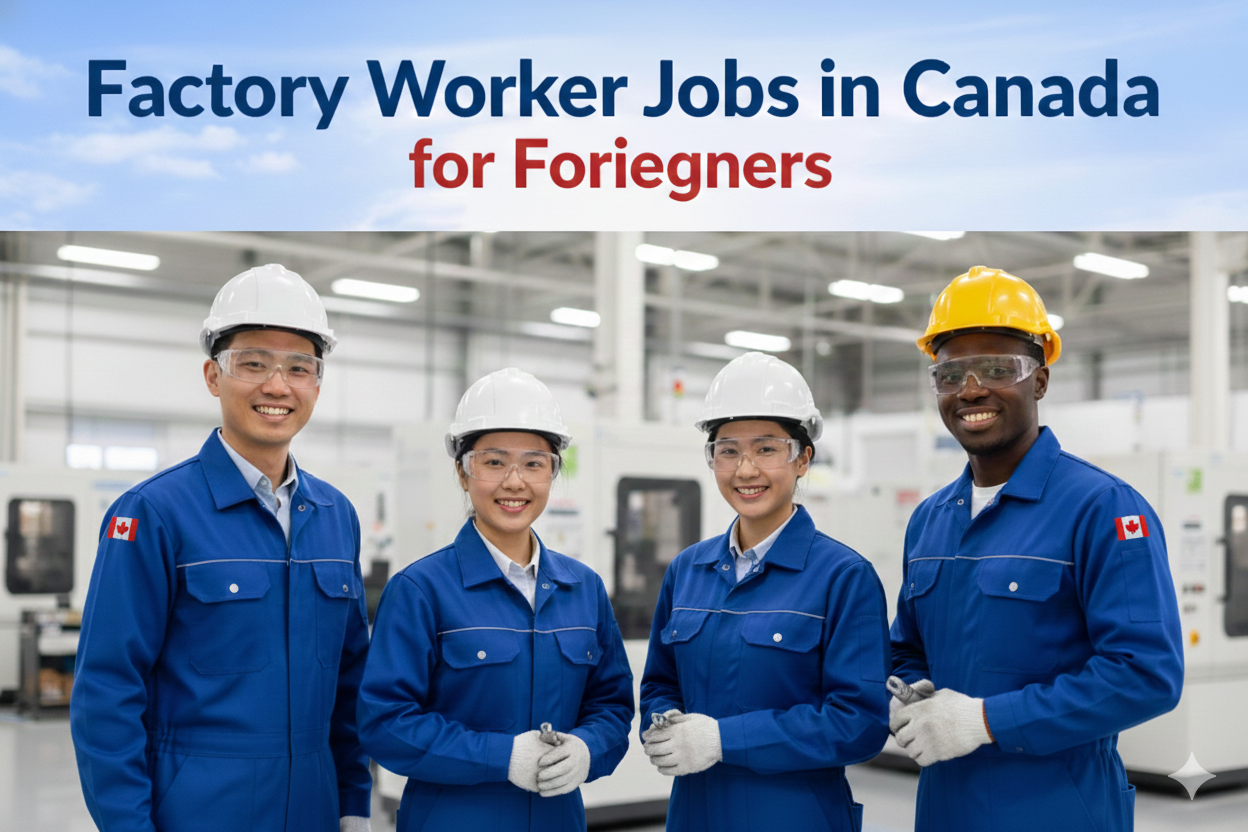
Factory Worker Jobs in Canada for Foreigners (Visa-Supported Opportunities 2026)
Factory worker jobs in Canada continue to play a major role in the country’s economy and labor market. As a Canadian employer hiring immigrants, we depend on foreign workers to support manufacturing, food processing, packaging, and production facilities across the country. Many factories struggle to fill positions locally due to labor shortages, shift demands, and physically demanding work conditions. Because of this gap, Canada offers legal pathways that allow a foreigner to work abroad through approved visa programs. Factory jobs provide immigrants with stable income, structured work schedules, and protection under Canadian labor laws.
For many immigrants, factory work represents one of the most realistic job options abroad. These jobs do not require advanced degrees or professional licensing. Instead, employers value reliability, physical ability, and willingness to follow workplace rules. Factory worker jobs allow foreigners to gain Canadian work experience, earn legal wages, and integrate into the workforce. While the work can be demanding, it offers consistent employment and overtime opportunities. This guide explains everything an immigrant needs to know about factory worker jobs in Canada, including skills, salaries, regions, visa options, and application steps.
Entry-Level Skills and Experience Required
Factory worker jobs in Canada focus on practical skills rather than formal education. Most employers do not require a university degree or technical diploma. A high school certificate may be helpful, but it is not always mandatory.
Physical fitness is one of the most important requirements. Factory workers often stand for long periods, move materials, operate basic machines, and perform repetitive tasks. Employers expect immigrants to maintain focus, follow safety instructions, and handle equipment carefully.
Basic language skills are also important. While full fluency in English or French is not always required, a foreigner must understand simple instructions, warning signs, and workplace rules. This ensures safety and smooth communication with supervisors and coworkers. Many employers provide job-specific training after hiring.
Previous experience in a factory or warehouse can increase employment chances, but it is not compulsory. Many immigrants secure entry-level jobs abroad with no prior experience. Employers value punctuality, teamwork, and a positive attitude more than work history.
Regions with the Highest Payment Structures
Factory worker wages in Canada vary depending on province, demand, and cost of living. Below are the top five regions where immigrants often find stronger payment structures.
1. Ontario
Ontario is Canada’s manufacturing center. The province has thousands of factories producing automotive parts, food products, and consumer goods. Factory workers here earn competitive hourly wages. Overtime and shift premiums are common due to high production demand.
2. Alberta
Alberta offers higher wages because of labor shortages. Many factories struggle to find local workers willing to work long shifts. Immigrants working night or weekend shifts often earn extra pay.
3. British Columbia
British Columbia has a strong food processing and packaging industry. Wages tend to be higher due to living costs. Employers often offer benefits and stable contracts to retain workers.
4. Quebec
Quebec provides structured factory employment with predictable wages. Some factories prefer French-speaking workers, but many hire immigrants with basic language skills.
5. Manitoba
Manitoba offers moderate wages but lower living expenses. Many immigrants choose this province as a starting point for factory jobs abroad.
Most factories pay hourly wages and provide overtime pay after standard working hours.
Salary Expectations for Immigrants
Salary expectations for factory worker jobs in Canada depend on experience, shift type, and location. Below is a realistic salary overview for immigrants working abroad.
| Job Position | Hourly Wage (CAD) | Monthly Earnings (CAD) |
|---|---|---|
| Entry-Level Factory Worker | 16 – 18 | 2,500 – 2,900 |
| Experienced Factory Worker | 18 – 22 | 2,900 – 3,500 |
| Machine Operator | 20 – 26 | 3,200 – 4,100 |
| Night Shift Worker | +1 – 3/hour | Varies |
| Overtime Hours | 1.5× regular rate | Varies |
Salary Summary
Factory worker jobs provide immigrants with stable and legal income. While these roles may not lead to high wealth, they allow foreigners to cover living costs, send remittances, and plan long-term settlement. For many immigrants working abroad, factory employment offers financial security and consistency under a valid visa.
Companies Hiring Warehouse Workers in the United States
Some immigrants compare factory jobs in Canada with warehouse jobs in the United States. Below are well-known companies that legally hire immigrants who already have valid U.S. work authorization.
Amazon
Amazon hires warehouse workers for sorting, packing, and shipping. Immigrants must hold legal permission to work in the U.S. No guaranteed visa sponsorship.
Walmart Distribution Centers
Walmart hires warehouse workers for logistics operations. Applicants must already have work authorization.
FedEx Supply Chain
FedEx hires warehouse and logistics workers. Background checks and valid documents are required.
UPS
UPS employs warehouse workers for package handling. Immigrants must have legal work permits.
Target Distribution Centers
Target hires entry-level warehouse staff. Valid employment authorization is mandatory.
Important Notice:
These companies do not guarantee visa sponsorship. Immigrants must already hold the correct visa.
Visa Types and Options for Factory Work in Canada
Foreigners cannot work abroad in Canada without proper authorization. Below are the most common visa options for factory work.
Temporary Foreign Worker Program (TFWP)
This program allows Canadian employers to hire foreign workers when local workers are unavailable. Employers must obtain a Labour Market Impact Assessment (LMIA).
Labour Market Impact Assessment (LMIA)
An LMIA confirms that hiring a foreigner will not negatively affect the Canadian labor market. Many factory jobs require LMIA approval.
Provincial Nominee Program (PNP)
Some provinces nominate factory workers for permanent residence. This option supports long-term settlement.
Open Work Permit
Certain immigrants, such as spouses of students or workers, may qualify for open work permits that allow factory employment.
Visa approval depends on employer compliance and government regulations.
Where to Find Factory Worker Job Opportunities
Foreigners searching for factory jobs abroad should use reliable and legal sources only.
- Government of Canada Job Bank
- Provincial employment portals
- Official company career pages
- Licensed recruitment agencies
- Employer-approved immigration consultants
Avoid agents who promise guaranteed visas or charge illegal fees.
How to Apply for Factory Jobs as an Immigrant in Canada
The first step is to confirm your eligibility to work in Canada. You must hold or apply for the correct visa or work permit.
Prepare a simple resume. Focus on physical ability, reliability, teamwork, and any relevant experience. Keep information honest and clear.
Apply through official job platforms or company websites. Do not rely on unofficial social media offers. If an employer selects you, they may assist with LMIA documentation.
Wait for visa approval before traveling or starting work. Working without authorization can affect future immigration opportunities.
Working Conditions and Employee Rights
Factory workers in Canada are protected by labor laws. Employers must provide safe working environments, fair wages, and proper breaks.
Immigrants have the same workplace rights as local workers. These rights include overtime pay, minimum wage protection, and health and safety standards.
If issues arise, workers can report concerns to provincial labor authorities without fear of discrimination.
Challenges Foreigners Should Expect
Factory work can be physically demanding. Long shifts, repetitive tasks, and strict schedules are common.
Some immigrants may face language barriers at first. However, most adapt quickly with practice and support from coworkers.
Cost of living varies by province. New immigrants should budget carefully during their first months abroad.
Long-Term Opportunities for Immigrants
Factory worker jobs can lead to long-term opportunities. Experienced workers may move into machine operation, supervision, or quality control roles.
Some provinces allow factory workers to apply for permanent residence through nomination programs. Canadian work experience strengthens immigration profiles.
For many foreigners, factory jobs serve as a foundation for a stable future in Canada.
Conclusion
Factory worker jobs in Canada remain one of the most practical job opportunities abroad for immigrants and foreigners. These roles offer legal income, workplace protection, and structured employment under approved visa programs. While factory work requires physical effort and discipline, it provides stability and long-term potential for oversea workers. With proper preparation, honest expectations, and legal compliance, immigrants can build secure lives through factory jobs in Canada.